

Buddhism
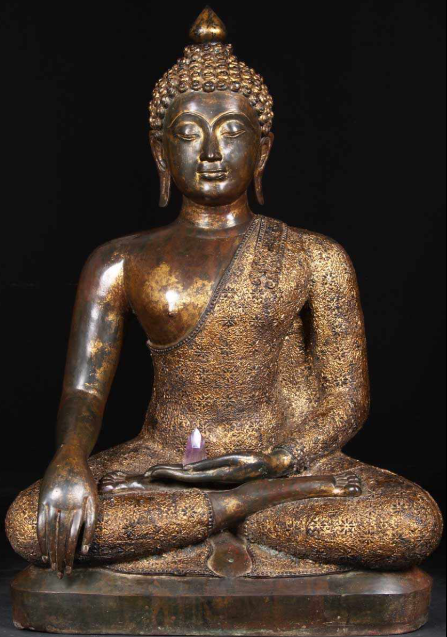
Founder: Siddhartha Gautama (the Buddha)
Time & Place of Origin: 5th century BCE, Northern India / Nepal region
Approximate Number of Followers: 500 million
Core Texts:
Tripitaka (Pali Canon)
Mahayana sutras (e.g., Lotus Sutra, Heart Sutra)
Tibetan Buddhist texts (various canons)
Core Beliefs (Generalized)
Life involves suffering (dukkha)
Suffering arises from craving and ignorance
Suffering can end through enlightenment (nirvana)
The Eightfold Path leads to liberation
No permanent self (anatman)
*Note: Buddhism contains significant doctrinal diversity. These points reflect shared foundations, not uniform belief.
Origin Story
Buddhism began with Siddhartha Gautama, a prince who renounced his life of privilege to seek the cause of suffering. After years of ascetic practice and meditation, he attained enlightenment and taught a middle path between indulgence and self-mortification.
The Buddha rejected speculative metaphysics in favor of practical methods for ending suffering.
Major Traditions & Schools
Theravada: Emphasizes monastic discipline and early texts
Mahayana: Expands compassion ideal (Bodhisattva path)
Vajrayana: Ritual and esoteric practices (Tibetan Buddhism)
Zen, Pure Land, and other regional traditions
Key Historical Moments
Buddha’s teaching career (c. 5th century BCE)
Early Buddhist councils
Spread across Asia (Sri Lanka, China, Korea, Japan, Tibet)
Modern globalization and secular adaptations
Core Practices
Worship Style
Meditation (mindfulness, concentration, insight)
Chanting and ritual (varies by tradition)
Monastic and lay practice models
Core Practices
Meditation: Central practice for insight
Ethical conduct: Non-harm, right speech, right action
Wisdom cultivation: Insight into impermanence and non-self
Moral / Ethical Framework
Five Precepts (non-violence, honesty, restraint)
Compassion (karuna) and loving-kindness (metta)
Ethical behavior as pragmatic, not divinely commanded
Major Holidays
Vesak: birth, enlightenment, and death of the Buddha
Magha Puja: Community and discipline celebration
Regional observances vary
Reasons People Believe Buddhism
(Arguments, not established facts)
Philosophical Arguments
Non-self doctrine: Challenges intuitive but problematic ego concept
Impermanence: Aligns with observed reality
Pragmatism: Focus on reducing suffering, not metaphysical claims
Experiential Claims
Meditative practices produce verifiable psychological effects
Mindfulness linked to reduced stress and suffering
Teachings framed as testable through practice
Psychological & Ethical Appeal
Does not require belief in a creator god
Emphasis on mental health and compassion
Suffering framed as a solvable condition
Epistemic Humility
Suspension of metaphysical speculation
Encouragement to question authority (e.g., Kalama Sutta)
Practice-based validation
Adaptability
Compatible with secular frameworks
Flexible integration with local cultures
Increasing relevance in modern psychology
Reasons People Do Not Believe Buddhism
(Philosophical, historical, and ethical critiques)
Logical / Philosophical Critiques
No-self paradox: Who attains enlightenment if no self exists?
Rebirth without soul: Conceptual difficulty
Nirvana: Vague or negative definition (cessation rather than fulfillment)
Scientific Objections
Rebirth and karma lack empirical support
Enlightenment experiences are subjective
Meditation effects explainable neurologically
Historical Critiques
Earliest texts written centuries after Buddha’s death
Doctrinal evolution across traditions
Mythologization of the Buddha over time
Moral Criticisms
Emphasis on detachment seen as withdrawal from social injustice
Monastic focus may undervalue ordinary life
Gender inequality in some monastic traditions
Practical Challenges
High demands of practice
Cultural barriers in traditional forms
Secularization risks losing core meaning
Common Misconceptions
“Buddhism is just meditation”
Meditation is central but embedded in ethics and wisdom.
“Buddhist don’t believe in anything”
Buddhism makes strong claims about suffering, impermanence, and liberation.
“Buddhism is purely peaceful”
Historical and institutional conflicts have occurred, like any tradition..
Suggested Thread Prompts for Discussion
“Is no-self psychologically true or conceptually incoherent?”
“Does Buddhism avoid or solve metaphysical problems?”
“Is nirvana a meaningful goal?”
“Can Buddhism be fully secularized?”